

Posted by Caroline Khelaifia on Tue/ Oct /2026
Why Do the French Do It Best? French Art de Vivre | Maison Otto
Why Do the French Do It Best?
There is a question I am asked surprisingly often at Maison Otto:
“Why do the French do it so well?”
It usually comes while someone is holding something — a beautifully woven tea towel, a perfume they cannot stop smelling, a simple household brush, a piece of jewellery or a bar of soap.
Why does something so practical still manage to be beautiful? Why do the colours feel different? Why does the quality feel so good?
As a French woman, perhaps I am not entirely impartial. But after more than 30 years working with fashion, fragrance, retail and lifestyle, I think there is an answer.
It isn't simply that the French make better things.
I think we have a different relationship with the things we use every day.
Practical Can Still Be Beautiful
In France, there has long been an expectation that something can perform its function and give pleasure.
A tea towel needs to dry the dishes — but it can also be beautifully woven.
A soap needs to clean your hands — but it can smell wonderful and look beautiful beside the basin.
A market bag carries your shopping — but why shouldn't it be made well, come in fabulous colours and last for years?
A household brush is a tool — but there is no reason the wood shouldn't feel lovely in your hand.
These aren't necessarily considered luxuries.
They are simply part of everyday life.
Perhaps that is the first part of the answer: the French don't always separate usefulness from beauty.
There Is Savoir-Faire Behind It
France has an extraordinary tradition of specialist makers and savoir-faire — knowledge and skills accumulated over generations.
Perfumers, weavers, ceramicists, jewellers, soap makers, embroiderers and countless other artisans have helped create regional traditions that still influence French craftsmanship today.
Think of Grasse and perfume, Limoges and porcelain, Lyon and silk, Provence and soap.
When knowledge is passed from one generation to another, the smallest details matter: the choice of material, the weave of a fabric, the balance of a fragrance, the finish of an object and how well it will age.
You aren't simply buying the object. You are often buying the knowledge behind it.
French People Are Difficult!
I sometimes give customers another answer:
French people are difficult.
We have opinions about everything.
Bread. Cheese. Coffee. Fabric. Restaurants. Wine. Perfume. How something should be cooked — and most certainly how our grandmother used to cook it.
We notice things.
We smell the melon before buying it. We touch the fabric. We ask where something was made. We notice whether the bread is good. We notice someone's perfume.
And we are certainly not shy about saying when something isn't good enough.
It can be exhausting!
But underneath all that complaining is something quite important: an expectation of quality.
French Style Is Not About Perfection
French style is often portrayed as expensive or impossibly chic. I don't think that's really the secret.
It is more about balance and restraint.
A beautiful table might combine old linen, mismatched glasses, simple food and flowers from the garden. A woman might wear jeans and a white shirt with beautiful earrings and an unforgettable perfume.
Not everything needs to match.
Not everything needs to be new.
Not everything needs to announce how much it cost.
Often, good French style is simply knowing what to choose — and when to stop.
And Then There Is Perfume
Of course, this subject is particularly close to my heart.
In France, perfume has traditionally been part of getting dressed rather than something saved for special occasions.
French perfumery has centuries of extraordinary expertise behind it, but fragrance is also emotional. It connects us with people, places and memories.
The right perfume shouldn't simply be fashionable.
It should make you feel something.
It should make you want to smell your wrist again.
Perhaps It Is Really L'Art de Vivre
Eventually, I think the answer comes back to a very French expression: l'art de vivre — the art of living.
It sounds grander in English than it really is.
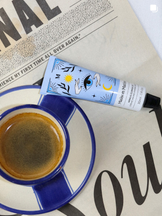
It can mean making coffee in a cup you love. Setting the table for a simple dinner. Wearing perfume for yourself. Buying good bread. Using the beautiful linen instead of saving it for guests. Wrapping a present with care.
These are small things.
But our lives are largely made up of small things.
So, do the French really do it best?
Certainly not everything.
But I do think France has preserved something rather special: the belief that quality, beauty and pleasure shouldn't be reserved for luxury or special occasions.
They can be in the soap beside your sink, the tea towel in your kitchen, the basket you take to the market, the jewellery you wear every day and the perfume you spray in the morning.
And perhaps that is what the French really do best:
making the everyday feel a little more special.
At Maison Otto, that is what I try to bring to Melbourne — not simply French products, but some of the craftsmanship, savoir-faire and art de vivre behind them.